
“Of course I have a growth mindset.”
I hear that a lot.
Most people in leadership or high-performance environments have read Carol Dweck’s work. The idea is well known now. We’re told that successful people embrace challenge, welcome feedback and view failure as part of learning.
In theory, almost everyone agrees with it.
But in practice, the moment someone’s long-held assumptions are challenged, things can get uncomfortable very quickly.
I saw this play out recently while coaching a senior executive.
The Moment Things Got Interesting
When he first approached me for coaching, I was genuinely excited.
Anyone who actively seeks coaching is already ahead of the curve. It usually means they’re open to reflection and growth.
The early conversations were productive. We talked about leadership pressure, decision-making, and how he handled complexity in his role.
But then we started digging a little deeper.
We began exploring some of the assumptions that had shaped how he led for years.
That’s when something changed.
He froze.
Not in a dramatic way. Just a subtle shift. The conversation tightened. The openness disappeared.
Suddenly the discussion became more defensive than reflective.
It’s a moment I’ve seen many times.
The Gap Between Belief and Behaviour
When that happens, I try to approach it carefully. Coaching works best when people arrive at insights themselves rather than feeling judged or pushed.
But sometimes it’s important to call something out.
So I asked him a simple question.
“Do you think you have a growth mindset?”
Without hesitation he said yes.
Most people do.
But then we started looking under the hood.
Because believing you have a growth mindset and actually operating from one are two different things.
What Carol Dweck’s Research Actually Shows
Carol Dweck’s work is often simplified into motivational slogans.
But the real insight from her research is more uncomfortable than that.
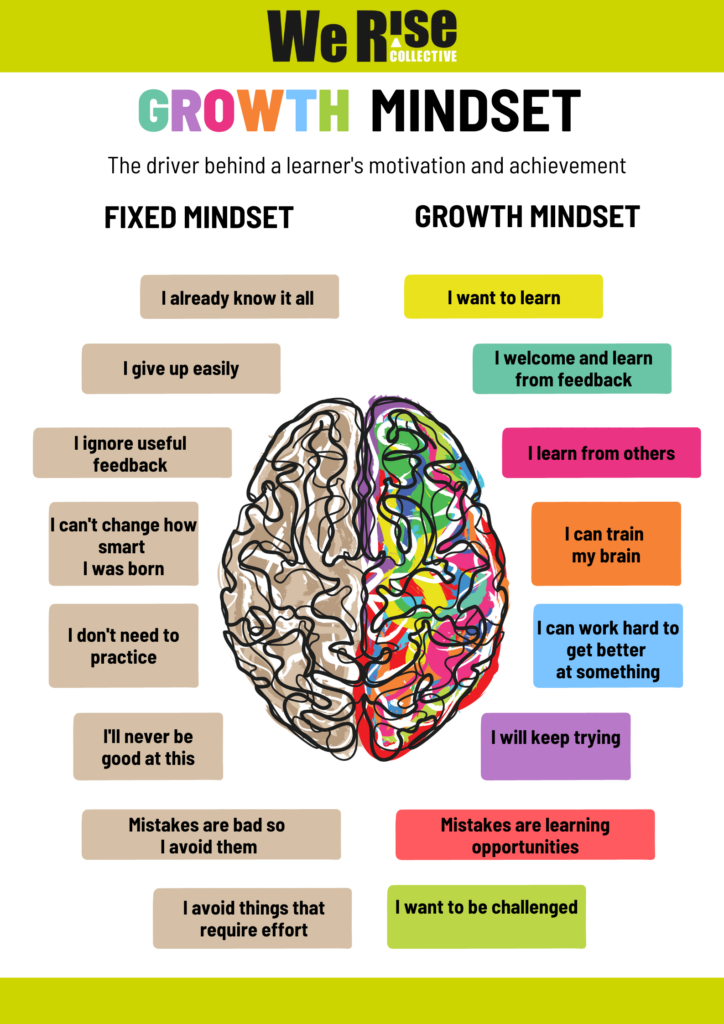
People with a fixed mindset tend to:
- avoid challenges that might expose weakness
- become defensive when receiving feedback
- see effort as a sign they’re not naturally capable
- feel threatened by the success of others
People with a growth mindset, on the other hand:
- lean into challenges
- treat mistakes as information
- see effort as part of mastery
- remain curious when their assumptions are questioned
The tricky part is that most of us sit somewhere in between.
Even very capable, accomplished people can slip into fixed thinking when their identity or expertise feels threatened.
A Few Questions Worth Asking Yourself
Instead of declaring that you have a growth mindset, it’s worth asking a few harder questions.
When someone challenges your thinking, what is your first reaction?
Curiosity?
Or defensiveness?
When something doesn’t go well, do you look for lessons?
Or do you instinctively protect your reputation?
When someone more junior raises an alternative view, do you explore it?
Or do you shut it down quickly?
These moments reveal far more about mindset than any statement about being open to growth.
The Real Work
Developing a growth mindset doesn’t mean enjoying criticism or being endlessly comfortable with challenge.
It means staying curious when your thinking is tested.
It means recognising that the discomfort you feel when challenged is often the exact place where learning begins.
That’s not always easy.
Especially for people who have built careers on competence and expertise.
But leadership in complex environments demands exactly that kind of openness.
Back to the Coaching Conversation
When we talked through these ideas, the executive I was coaching paused for a moment.
Then he said something I respected a lot.
“I think I like the idea of a growth mindset more than the reality of it.”
That kind of honesty is where real development starts.
Because the moment we recognise our blind spots, we gain the ability to work on them.
A Thought To Leave With
Growth mindset isn’t a label you give yourself.
It’s something that shows up in your behaviour when your thinking is challenged.
So the next time someone questions one of your assumptions, notice your first reaction.
If it’s discomfort, that might not be a problem.
It might be the doorway to growth.